
2026-09-15 ·
How to Spot Bed Bugs After a Trip Through Houston Airports
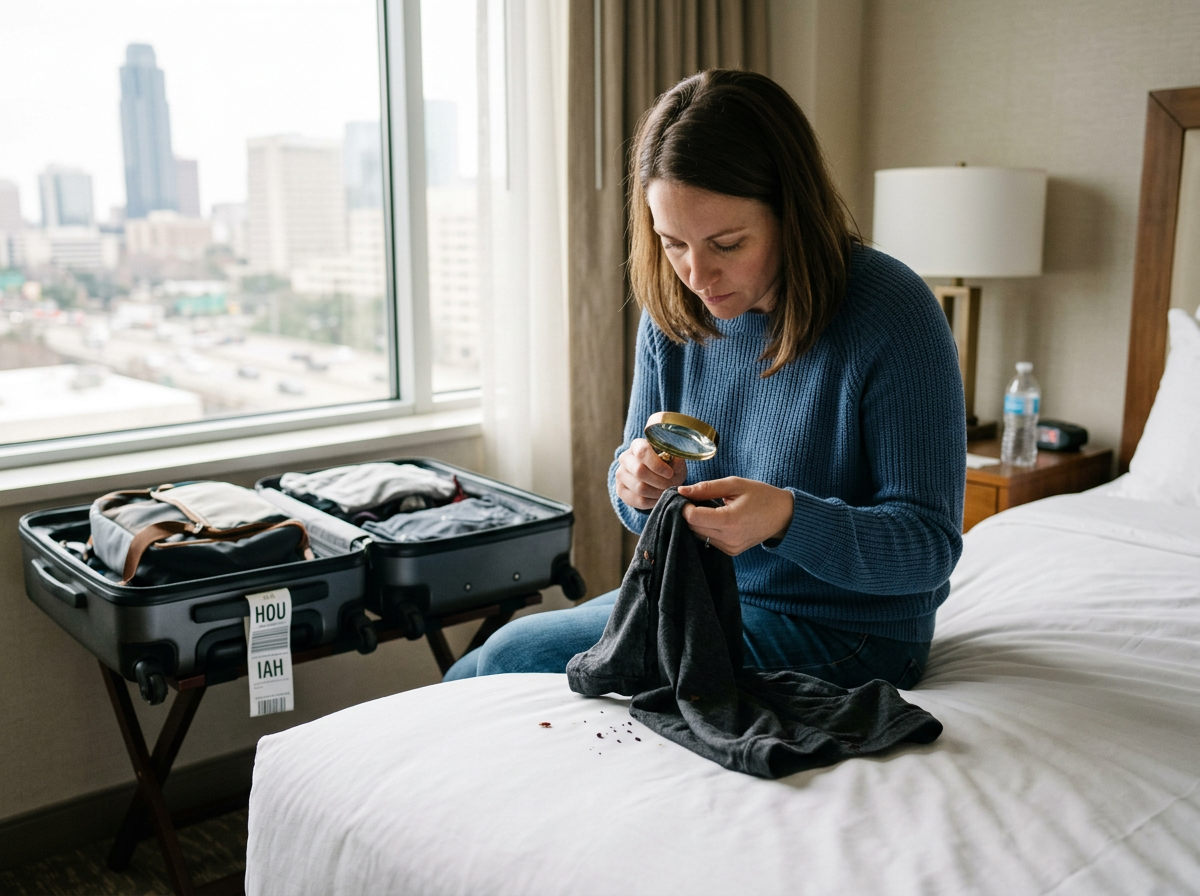
After a trip through Houston airports, inspect luggage seams, zippers and handles for dark fecal spots, shed skins or live bed bugs the size of an apple seed within the first 24 hours at home. These insects hitchhike on bags from planes, trains or shared airport seating, then move to nearby furniture once unpacked. Early detection prevents spread into mattress crevices or wall voids common in Texas multi-family housing along I-35 and I-10 corridors.
Checking Luggage Upon Arrival
Begin with your suitcase on a hard surface like a bathtub or tiled floor rather than carpet or beds. Shine a flashlight along stitching, wheels and interior liners where eggs can cluster. Look for 1 mm white oval eggs or clusters of black pepper-like droppings that smear when wiped with a damp cloth. Unpack directly into the dryer on high heat for 30 minutes if fabric items allow, since sustained dryer temperatures above 120°F kill all life stages including eggs that hatch in 6-10 days. Repeat the visual scan on any carry-on bags used during the flight.
Examining Clothing and Personal Items
Sort clothing immediately and run washable items through a full hot cycle followed by 20-30 minutes in a dryer set to at least 120°F. Check shoes, toiletry bags and electronics cases for small brown insects that move quickly when disturbed. Bed bugs can survive without feeding for 20-400 days depending on temperature and humidity, so even a single fertilized female can start an infestation weeks after your return. Place questionable items in sealed plastic bags until you finish the full inspection process.
Monitoring for Bites and Other Indicators
Watch for linear groups of red welts on exposed skin that appear 1-14 days after exposure, though reactions vary widely. Pull back sheets and examine mattress edges, box spring fabric and headboard joints for rusty stains or live bugs active at night. In humid southeast Texas conditions, eggs can hatch in as little as 6 days, so daily checks for the first two weeks help catch early activity before it spreads to adjoining rooms. Note any sweet musty odor in closets or drawers where bugs aggregate.
Understanding Survival Times and Life Stages
Adult bed bugs live several months and can go 400 days without a blood meal in cooler indoor settings typical of Tomball homes. Nymphs require a meal every few days to molt, while eggs remain viable for up to 17 days before hatching. Heat treatment reaching 122°F sustained for 90 minutes kills every stage, which is why many local properties choose this method over repeated chemical applications that miss hidden eggs in wall voids. Understanding the Bed Bug Life Cycle in Humid Southeast Texas explains these timelines in more detail for regional travelers.
Next Steps if Signs Appear
If you locate evidence, avoid moving items between rooms and contact a local provider for a targeted bed bug inspection. Professional teams can assess shared-wall risks in apartments and recommend heat or integrated options suited to Houston-area travel corridors. Review Inspecting Secondhand Furniture Bought at Tomball Markets before bringing any post-trip purchases indoors. Schedule follow-up checks every few weeks until activity stops.