
2026-09-15 ·
Bed Bug Treatment Considerations for Historic Buildings in Old Town Tomball
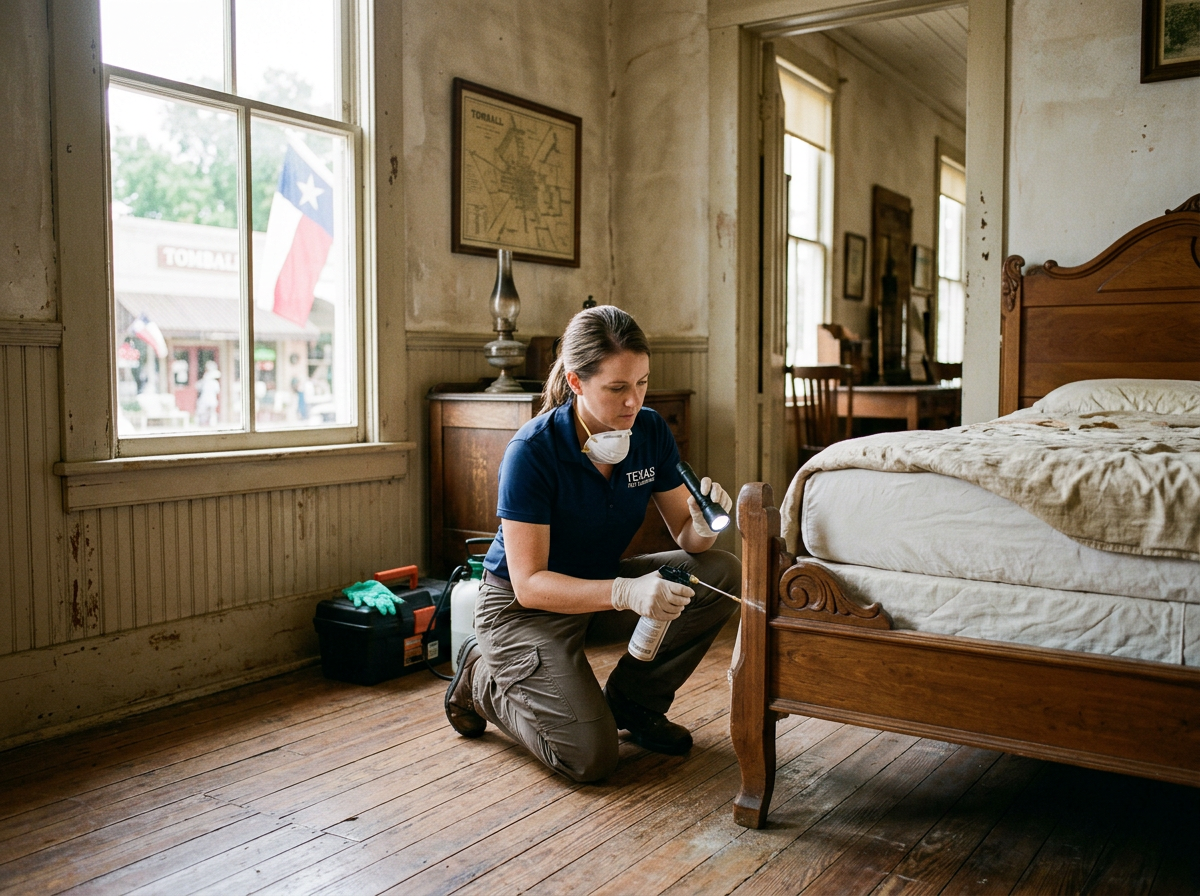
Heat treatment for bed bugs in Old Town Tomball historic buildings requires sustaining 120°F throughout all voids for at least four hours to eliminate every life stage, including eggs that hatch in 6-10 days, while monitoring to prevent warping of century-old wood or plaster.
Material and Access Challenges in Older Tomball Homes
Old Town Tomball structures built before 1940 often feature plaster-over-lath walls, wide baseboards, and multiple layers of flooring that create hidden voids where bed bugs travel between units. These cavities limit chemical reach and increase the value of whole-room heat that moves through air currents. Crews must map utility chases and chimney flues first because heat rises quickly and can overshoot target temperatures near ceilings. Preparation includes removing or protecting delicate trim and testing floor registers to confirm even distribution. Without these steps, pockets below 113°F can allow eggs to survive the initial cycle.
Why Heat Treatment Fits Historic Construction Better
Chemical applications risk staining original heart-pine floors or dissolving shellac finishes common in Tomball homes from the 1920s. Heat leaves no residue and reaches 122°F lethal thresholds in furniture and wall voids that sprays cannot penetrate. Technicians place sensors every ten feet and run fans to maintain uniform temperature for the required hold time. Because heat does not rely on residual activity, follow-up visits focus only on any missed harborage rather than repeated spraying. This approach aligns with preservation guidelines that discourage moisture-heavy products in older masonry and timber frames.
Inspection and Preparation Specific to Historic Properties
A thorough bed bug inspection begins with lifting loose floorboards and checking behind picture rails where bed bugs cluster during daylight. Residents should launder bedding on high dryer heat for thirty minutes and bag items they cannot treat. Mattresses and box springs receive encasements after inspection to prevent re-infestation from travel corridors along I-35. The linked guide on preparing your Tomball house details room-by-room steps that protect historic surfaces while exposing all potential harborages.
Multi-Unit Considerations Along Main Street Corridors
Many Old Town buildings share party walls with adjoining shops or apartments, allowing bed bugs to move through electrical boxes and pipe sleeves. Heat treatment protocols require treating both sides of the shared wall on the same day to break the cycle. Technicians coordinate with neighboring owners to avoid partial treatments that leave viable eggs ready to hatch in 6-10 days. Regular monitoring every three months, as outlined in the article on how often Tomball homeowners should inspect, helps catch new introductions from second-hand furniture before they spread through voids.
Post-Treatment Monitoring and Long-Term Habits
After heat reaches every zone, crews perform a final visual check and recommend quarterly inspections for the first year. Bed bugs can survive several months without feeding, so any new items brought into the home should be isolated and examined. Keeping clutter low reduces resting sites along baseboards and inside built-in cabinetry typical of historic Tomball homes. When travel or student move-in cycles increase risk, a targeted bed bug heat treatment can be scheduled without broad chemical use that might affect original finishes.