
2026-09-15 ·
Signs of Bed Bugs in Vehicles Parked at Tomball Commuter Lots
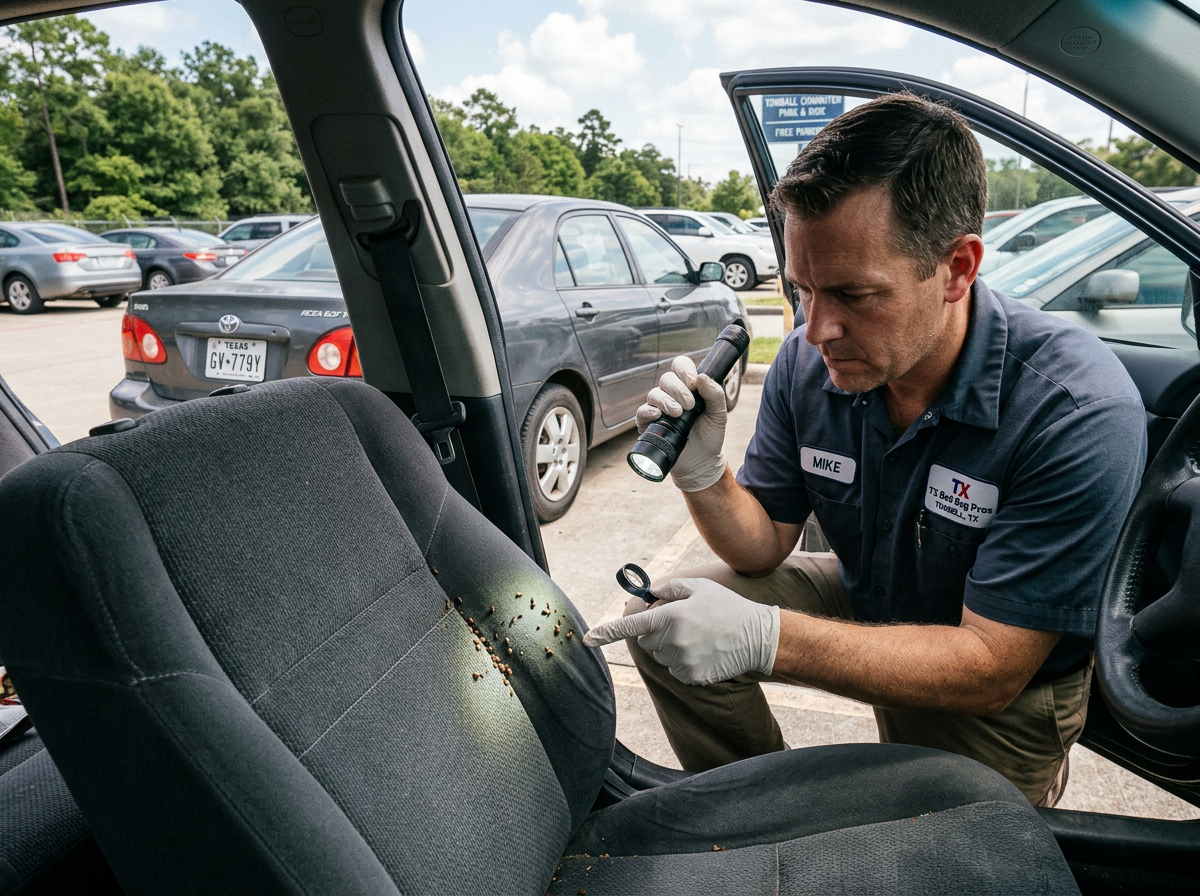
Bed bugs appear in vehicles at Tomball commuter lots most often through small dark fecal spots on fabric seats, tiny blood smears on headrests, and clusters of pale shed skins tucked into seat seams or floor mat edges. These signs show up after repeated use on corridors like I-35 and I-10 where commuters carry items between homes, offices, and travel stops. The insects survive weeks without feeding inside a parked car because temperatures stay moderate and cracks provide shelter. Checking these exact locations first reveals activity before it spreads to home interiors.
Spotting Fecal Marks and Blood Stains on Seats
Dark, rust-colored dots the size of pinheads cluster along seat stitching and under seat belts in cars left at Tomball park-and-ride areas. These marks come from digested blood meals and smear when wiped with a damp cloth. Blood stains appear as small red or brown dots on light upholstery after a bug feeds on a sleeping or resting passenger during an early commute. Commuters returning from Houston routes frequently find these on driver seats because the fabric stays warm and undisturbed for hours. Inspecting with a flashlight at an angle highlights the spots against fabric patterns. Repeated sightings in the same vehicle suggest ongoing movement between the car and another location along the commute path. Bed bug inspection helps confirm whether the marks come from active insects or old residue.
Finding Live Insects and Shed Skins in Seams
Live bed bugs measure about 4-5 mm and hide in seat bolsters, armrest crevices, and the plastic trim around door panels of vehicles parked daily in Tomball lots. They move slowly when disturbed and often cluster near the seat adjustment levers. Pale yellow or white shed skins, called exuviae, collect in narrow gaps where nymphs molt between growth stages. Egg hatch timelines run 6-10 days under typical Texas summer heat inside a closed car, so fresh skins appear regularly when an infestation builds. Commuters who carry bags or clothing from multi-unit buildings notice these signs first in the back seat area. Running a credit card along seams dislodges hidden insects for visual confirmation without damaging upholstery. Bed bug heat treatment reaches the 120°F sustained temperature needed to kill all stages when home treatment becomes necessary.
Checking Floor Mats, Trunk Areas, and Cargo Spaces
Floor mats and the trunk liner in Tomball commuter vehicles collect fecal specks and live bugs because these flat surfaces stay in contact with shoes and luggage. Second-hand furniture or items picked up near Tomball markets can transfer insects directly into the cargo area during loading. Bed bugs survive without feeding for 2-4 months in these protected spots when the car sits unused overnight. Inspect the spare tire well and under the trunk carpet for clusters of dark dots or moving insects. Vacuuming these zones weekly removes debris that might hide early signs. Inspecting secondhand furniture bought at Tomball markets outlines similar checks that apply to trunks after hauling large items. Regular attention here prevents transfer into the passenger cabin during daily drives.
Connecting Signs to Local Travel Patterns
Tomball commuters on I-10 and I-35 routes encounter higher chances of picking up bed bugs from hotel stays or shared-wall apartments before returning to parked vehicles. The insects move between adjoining units through wall voids and then ride along in bags or clothing. Student move-in cycles near nearby campuses add another pathway when vehicles transport belongings between rentals. Signs appear faster in summer because interior car temperatures accelerate egg development within 7-10 days. Drivers who notice new marks after specific trips can trace the source to those routes. Keeping a simple log of inspection dates and locations helps identify patterns tied to particular commutes rather than random occurrences.
Practical Steps After Finding Signs
When signs appear, remove floor mats and vacuum seams thoroughly before wiping surfaces with a damp cloth to confirm stains. Place items in sealed bags before bringing them indoors to limit spread. Contact a local service for targeted inspection rather than attempting full treatment in the vehicle itself. Tomball-based teams familiar with Tomball park-and-ride layouts understand how heat treatment works without leaving residuals that affect daily driving. Consistent checks every two weeks during peak travel months catch activity early and keep the issue contained to the car.